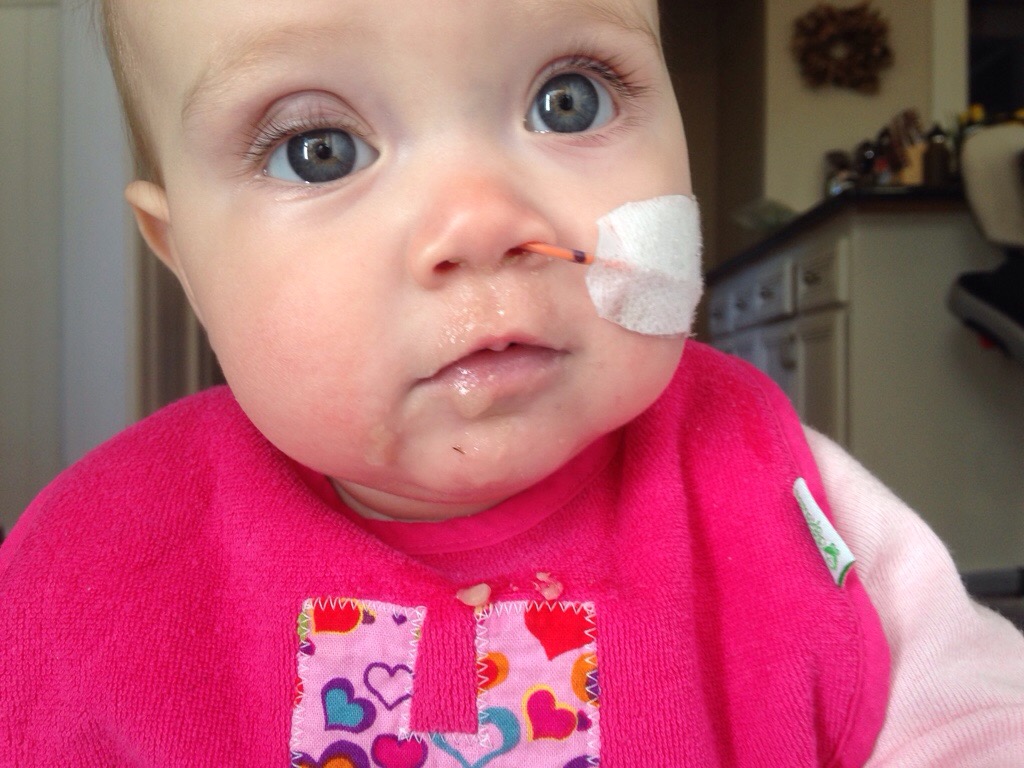
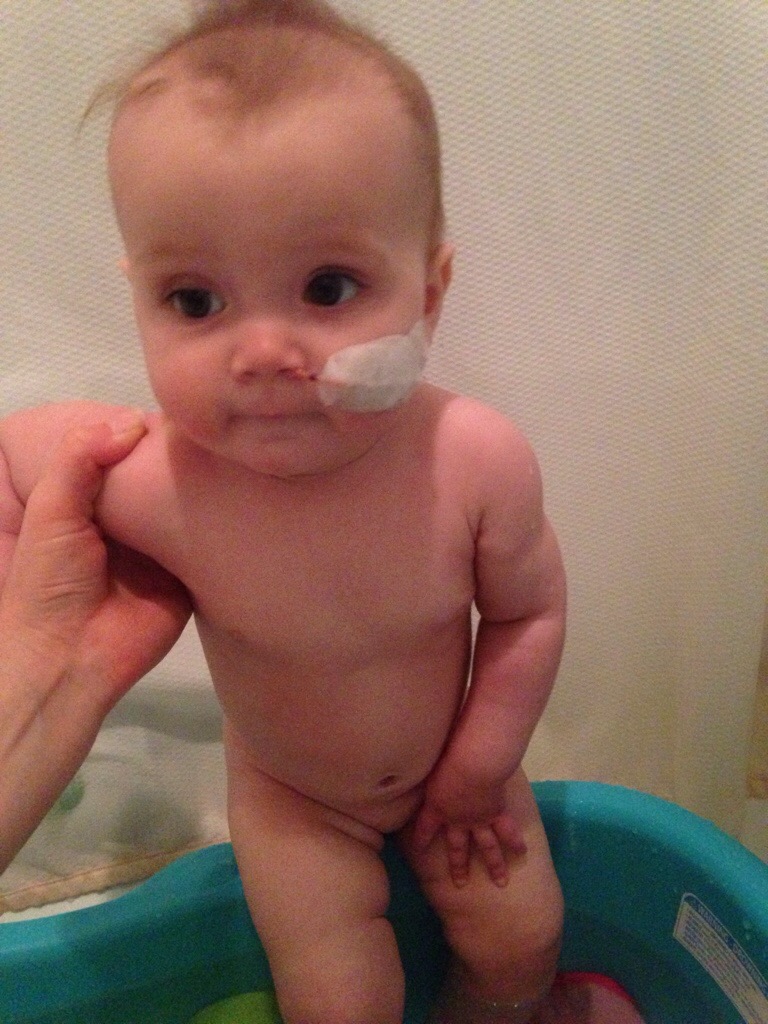
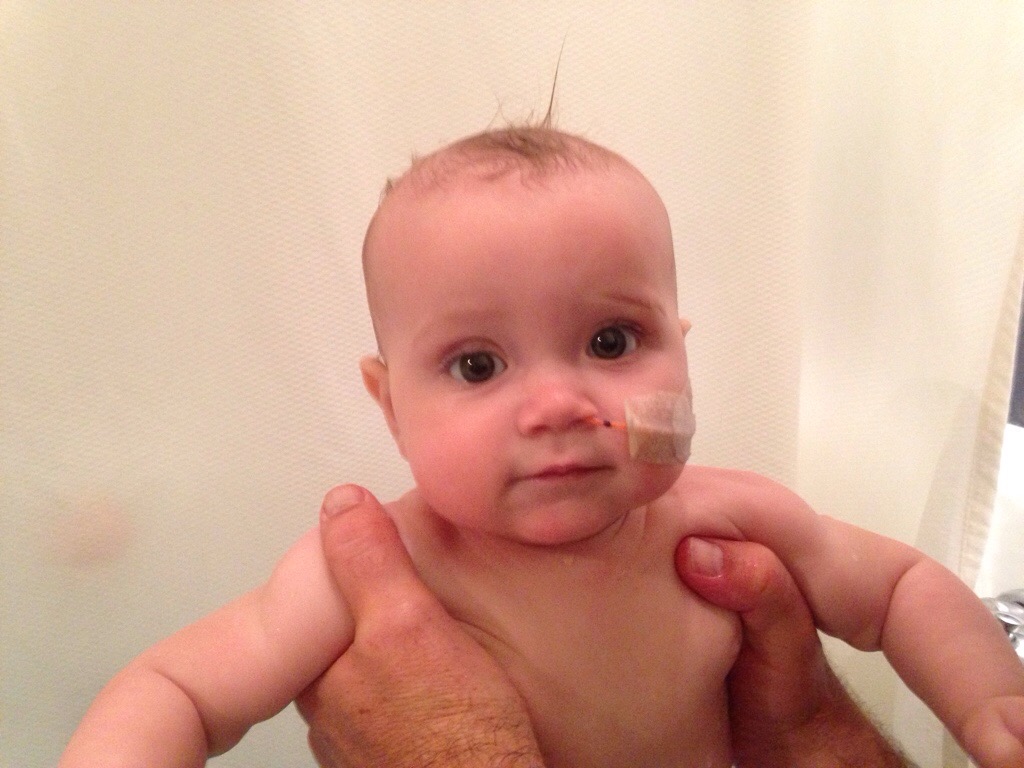
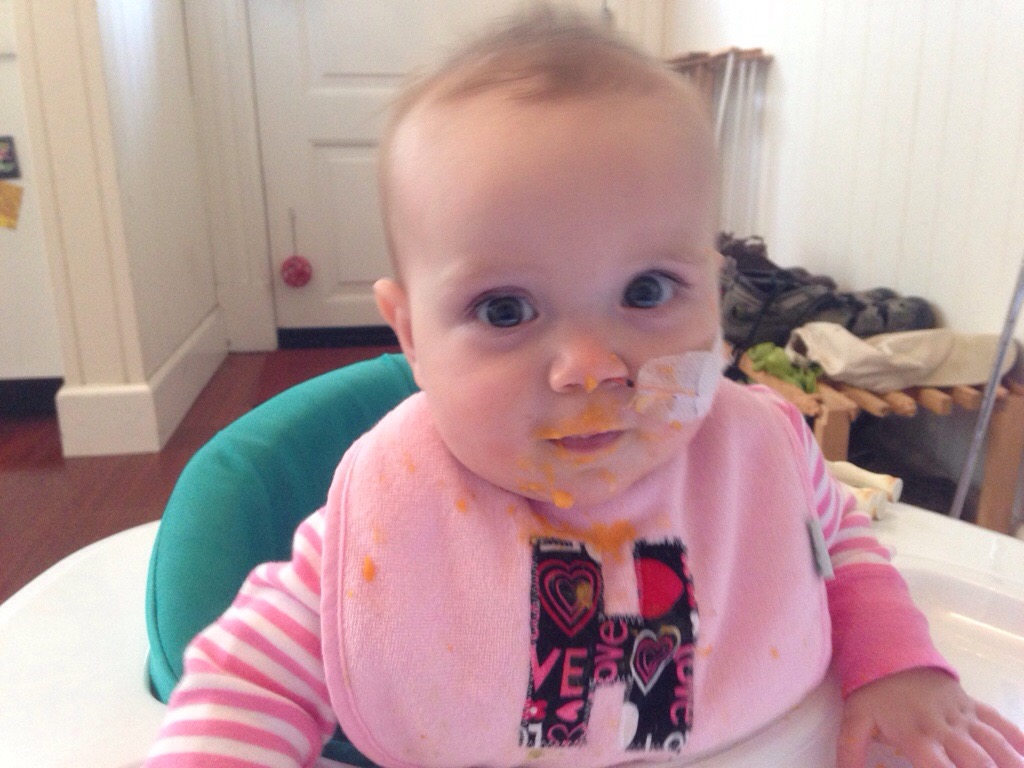
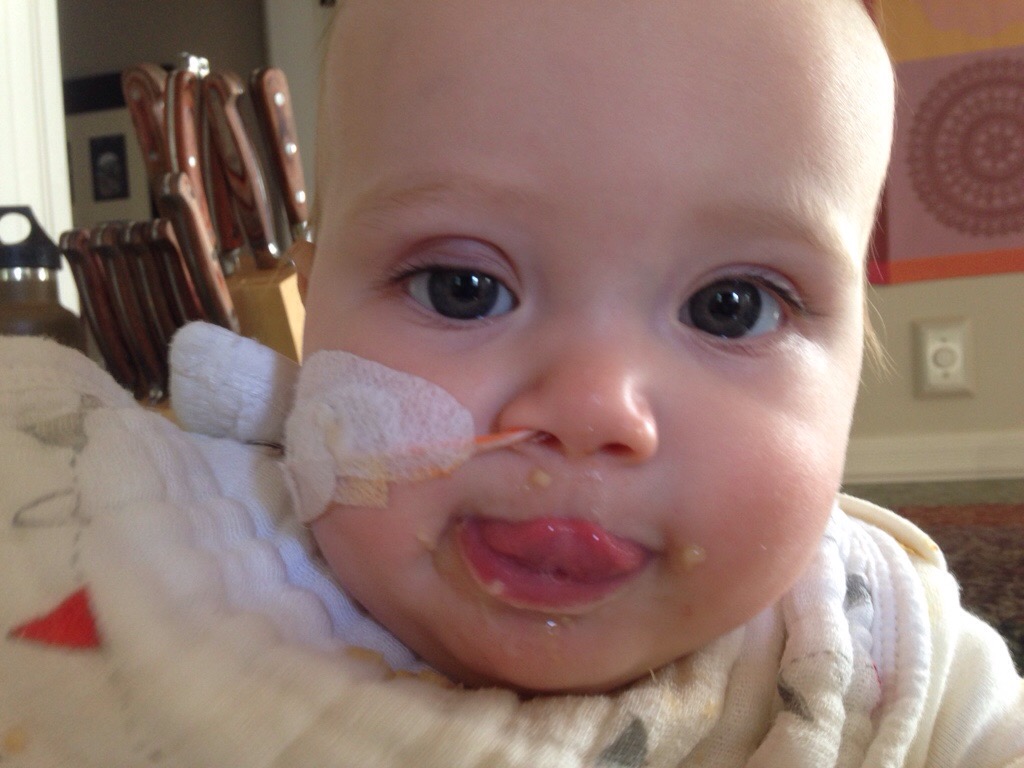
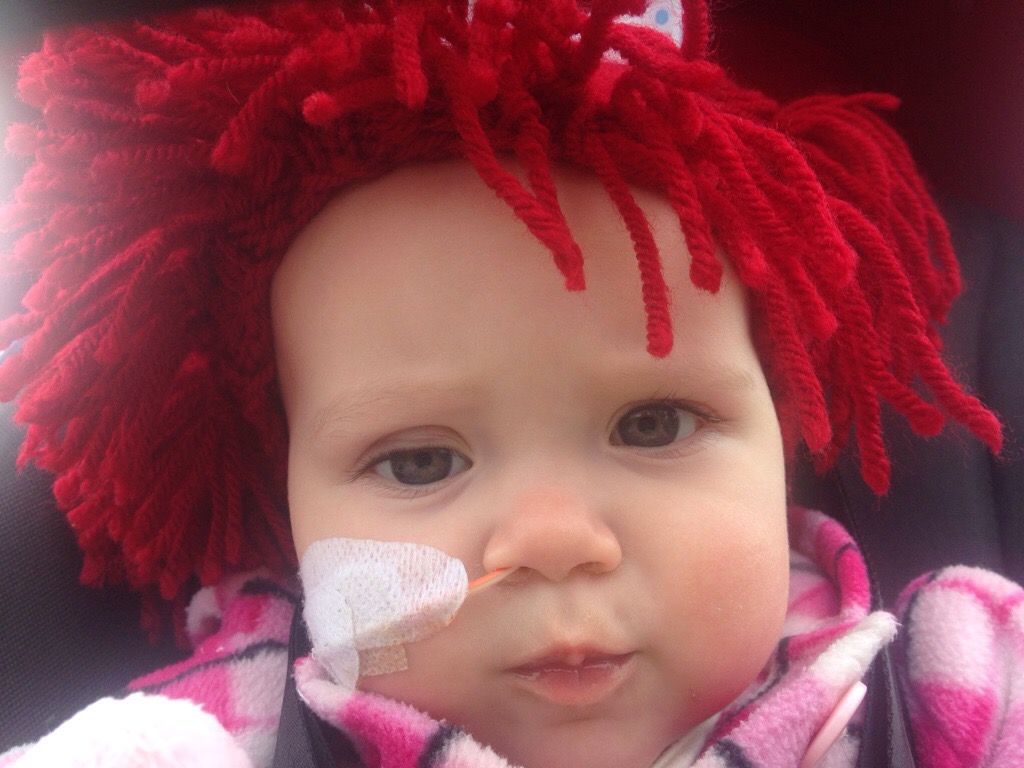
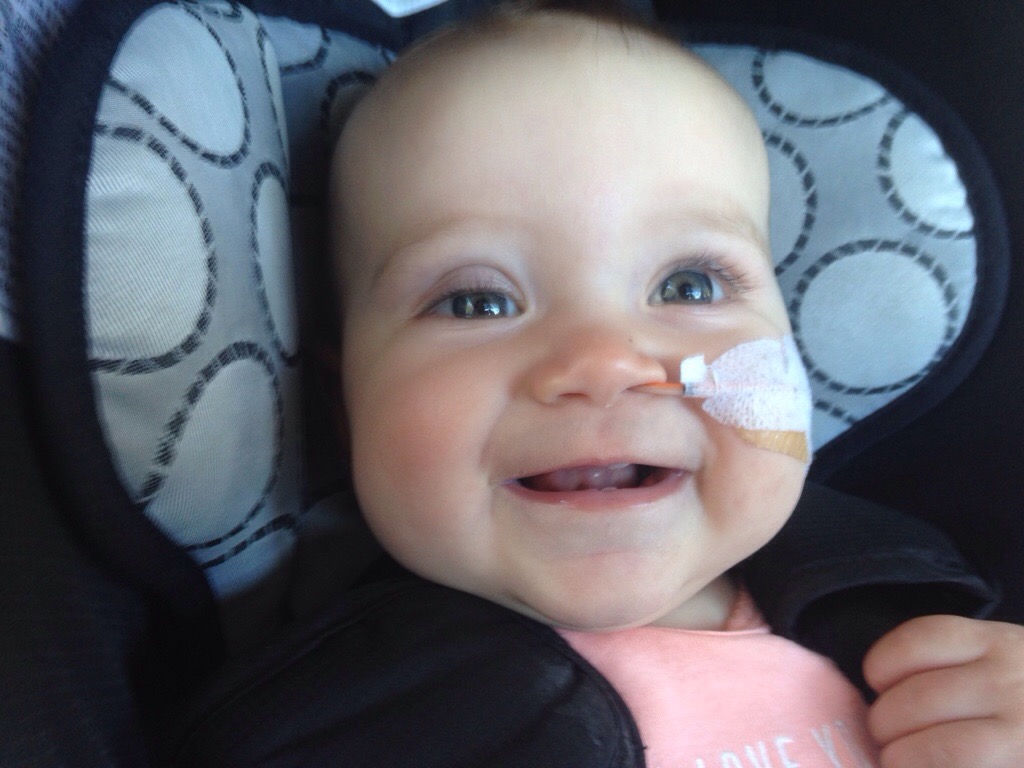
Hana had another checkup at Stanford yesterday. The consensus was that they “had nothing but good news”, but her heart is still the same. So that means that Hana looks good and her heart is still very sick. They aren’t concerned about the grunting noise unless she starts to do it continuously, while at rest. They said the echocardiagrams are just to check for blood clots that may be forming, not to really tell if her heart is doing better. They said the best indicator of her heart is her outward appearance and that seems to be excellent. They doubled the amount of carvedilol she is taking, which they had been planning to do all along. They decided to decrease the volume of fortified breast milk she is getting. Her weight gain in great, despite all the vomiting and she doesn’t seem to be retaining fluid, which is good.
The doctor asked me and Paul to start thinking about whether our preference would be to list Hana for a heart transplant early or late. Not that she needs a transplant now, because she is looking so great, but that she still will probably need one some day. (Although, some kids still have hearts that recover and they don’t really know why.) There are pros and cons to listing her for a heart transplant early or late. If she is listed “too early” then she may get a transplant “too early” and then you deal with all the downsides of transplant earlier than maybe was necessary. Four years after a heart transplant the mortality rate is 30%. If you get a transplant too early, then you increase the chances that you may need another transplant. But, if you are listed for heart transplant, on the late side, then you may get too sick while you wait and need a Berlin heart. A Berlin heart is a mechanical device that is surgically implanted (and you have to cart it around with you everywhere you go). It requires open heart surgery. Twenty-five percent of patients form a blood clot and have a stroke from the Berlin heart. The average waiting time for a heart for children Hana’s age is five or six months.
When we got home I had to run to the pharmacy. This was after I had spent a good amount of time on the phone trying to chase down her carvedilol, which I had requested on Monday and was still not ready. After dealing with a very unkind person on the phone who was practically yelling at me and scolding me, I walked down to the Kaiser pharmacy, where I was told her carvedilol would be ready. When I got there, it was certainly not ready and they didn’t seem like they were going to help me get it today, since her dosage had been increased they had canceled the previous refill and told me that it would be another 72 hours before the new prescription for it was ready. I was completely out of carvedilol. I would not have any to give her that evening. I started to cry at the pharmacy counter. I just felt beaten down. I felt like I had tried to do everything right, let everyone who had the power to make things happen know what I needed and when. I felt like I was running around practically begging for things in order for stuff to be taken care of. I was exhausted. I was frustrated. But mostly I was just really sad.
When you cry in public people treat you differently, especially when you are trying to pick up a heart medication that is special ordered as a solution because it is going to be given to a very young child. The woman told me to sit and she would personally come and get me when the carvedilol was ready. She also said she would transfer over all the other medications so I wouldn’t have to wait in line at the main pharmacy. The pharmacist came out and said he would get a rush put on the new Zantac prescription so I could take that home too. I appreciated it so much, but I still cried. I just couldn’t stop crying. When the prescriptions were ready I went back to the counter and paid for them. The woman at the counter said to keep the faith and she would keep Hana in her prayers.
I was in pain and people saw that and then were kind to me. I needed that kindness. As I was walking home it made me wonder how many of us are walking around in pain and we just think they are a jerk or worse. Really, they may just be in pain. If we could see their pain then we could know that what they need is some kindness. But we don’t usually share our pain, so we don’t know to be kind. Or, we could assume that when someone is a jerk or whatever word you want to call it, that maybe the way we really need to react is to treat them with kindness to help their pain too.







 Hana's Heart